The Five Most-Starred GPT-6 Astra Games, and How They Were Actually Built
The community catalogue lists 97 Astra games and ranks none of them, so I ranked the 11 with source repos by GitHub stars and opened the top five. All five are live. The most-starred ships 25 MB of soft-body Three.js; the second turns out not to be an Astra build at all, crediting Codex and Claude in its own README; the third publishes its full prompt, the reasoning setting and the 21-minute wall clock.
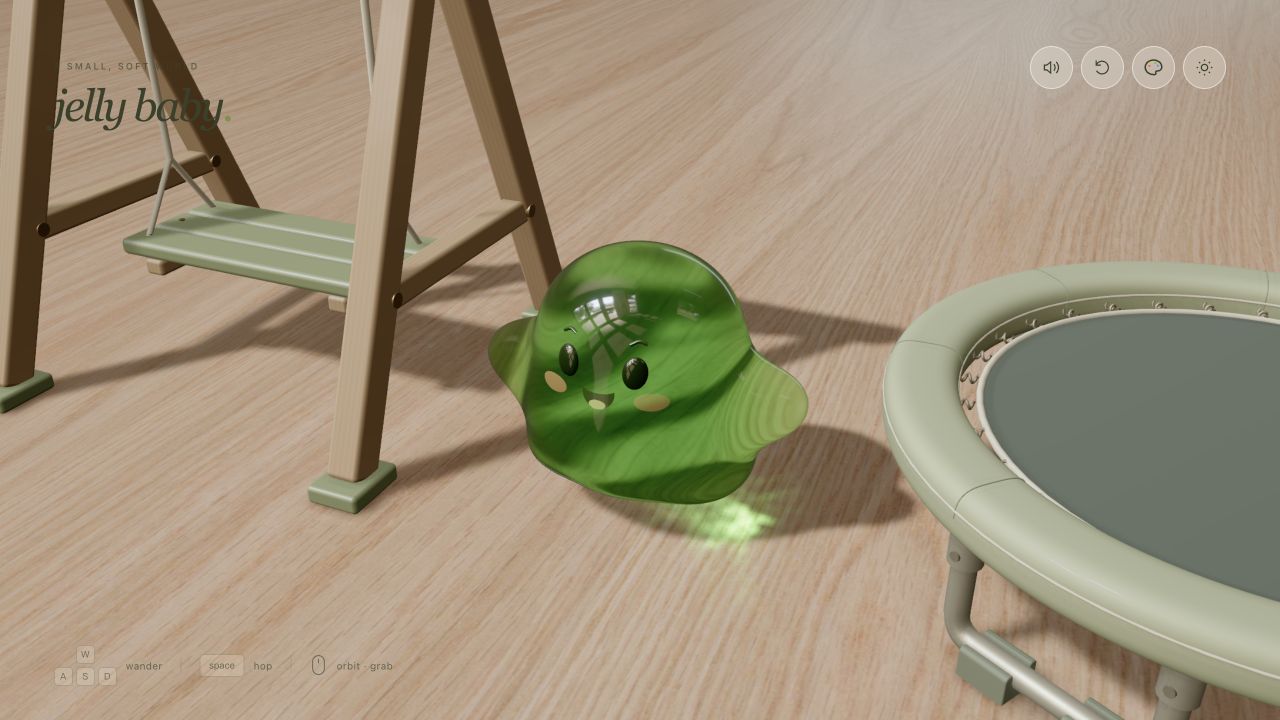
TL;DR — The community catalogue of GPT-6 Astra games lists 97 entries and ranks none of them. Its README carries no stars, plays, likes or views field at all. So I ranked the 11 entries that link a source repository by GitHub stars, opened the top five in a browser, and read their build notes. All five are live. The most-starred, Jelly Baby (152★), ships a 25 MB soft-body Three.js sandbox. The second, a Simpsons: Hit & Run browser port (136★), turns out not to be an Astra one-shot at all — its own README credits Codex and Claude and describes an asset conversion from a PS2 disc. The third publishes its full prompt, along with the reasoning setting and the wall-clock time: Xhigh, 21 minutes, one shot, one HTML file.
The catalogue does not rank anything
awesome-gpt-6-astra is the reference list: 97 games, 177 stars, catalogue updated 2026-09-14, maintained out of the LINUX DO community. Curated text and artwork are dedicated to the public domain under CC0; the linked games keep their own licences.
I pulled the raw README — 82 KB — and searched it. There is no popularity data of any kind. No "N stars", no play counts, no likes, no views. The per-entry template is title, creator, platform, Astra attribution, resources, screenshot. Categories are by genre, not by rank. The repo is also candid about its own limits:
this date records catalog maintenance, not a new play-test of every game
and, on attribution:
Model attribution is based on creator or submitter statements; unconfirmed details are marked
So "built with Astra" throughout this list means the creator said so. Nobody audited it. Keep that in mind for the whole article — including for entry number two, where it matters.
Ranking it by the one hard number available
Only 11 of the 97 entries link a source repository, so that is the population I can rank. Stars measure developer interest, not players. Figures pulled from the GitHub API on 2026-09-15.
| # | Project | ★ | Forks | Last push | Licence | Language |
|---|---|---|---|---|---|---|
| 1 | Jelly Baby | 152 | 39 | 2026-09-14 | GPL-3.0 | JavaScript |
| 2 | Hit & Run in the browser | 136 | 22 | 2026-09-10 | not declared | TypeScript |
| 3 | One-Shot Games (Mosswing, Melon Lab) | 50 | 20 | 2026-09-05 | none | HTML |
| 4 | The Free Game | 24 | 7 | 2026-09-08 | MIT | GDScript |
| 5 | BLACKWATER — Silent Harbor | 14 | 9 | 2026-09-04 | MIT | TypeScript |
For scale: the catalogue itself has 177 stars. Jelly Baby alone has 152.
Everything below I opened in a browser on 2026-09-15. All five loaded and rendered. Payload figures are what the page actually pulled.
1. Jelly Baby — 152★
Play: jelly.scottsun.io · Source: scottstts/Jelly-Baby · Creator: Scott
The image at the top of this article is Jelly Baby, captured mid-hop.
A soft-body jelly on a sunlit tabletop, with a trampoline and a swing. WASD to wander, space to hop, drag to orbit and grab.
Resources loaded   24,956 KB   (the largest of the five)
Canvases           1
Cold start         ~20 s, showing "Compiling the material"
Licence            GPL-3.0
One thing to know before you click. The canvas is WebGPU. Asking the page for canvas.getContext('webgpu') returns a GPUCanvasContext, while both webgl2 and 2d return null — there is no WebGL fallback, and no error message either. If the browser cannot obtain a WebGPU adapter, the intro screen simply stays up and nothing happens. Remote desktop sessions, disabled hardware acceleration, and older Firefox or Safari builds are the usual causes. To check, open a console and run navigator.gpu && await navigator.gpu.requestAdapter(), or look for the WebGPU row in chrome://gpu.
Even when it works it is slow: 20 to 30 seconds on an RTX 5080, through a Compiling the material stage and then a Drawing the first frame stage. A tetrahedral soft-body mesh of 216,702 vertices, 433,392 indices and 16,104 tets has to be uploaded and compiled before anything moves. The catalogue's own verification note records the same experience — first loading was slow and a retry was needed.
How it was built: the creator attributes the Three.js game to Astra in a public post and links the source. No prompt is published. The repo README covers what the thing is and how to move, not how it was generated. The catalogue’s own verification note is worth quoting because it is unusually honest about scope:
Loaded the soft-body tabletop playground and triggered a jump with Space; screenshot shows the jelly above the table. First loading was slow and a retry was needed. […] This is a playful physics sandbox without a score or win condition.
That matches what I saw. It is a toy, not a game — no score, no fail state. It is also the most visually finished thing on the list.
2. Hit & Run in the browser — 136★
Play: vheissu.github.io/hit-and-run-web · Source: Vheissu/hit-and-run-web
A browser port of the 2003 Simpsons driving game. Five canvases, 864 KB of JavaScript in a single file, plus converted game assets.
This is where the catalogue’s attribution caveat earns its place. The repository’s own "How this came together" section does not describe an Astra one-shot. It describes an asset conversion:
This began with a PAL PS2 ISO […] The archives were extracted, Pure3D geometry and PS2 vertex data were decoded, and the original textures, skeletons, animations and mission scripts were converted for a new Three.js runtime. The PS2 executable is not being emulated or recompiled.
And on which models did the work:
Blender handled the scenery and vehicle passes; Codex worked through the reconstruction, and Claude improved loading with WebP textures and concurrent downloads.
Codex and Claude — Astra is not named. The second most-starred entry in a GPT-6 Astra catalogue is, by its own account, not a GPT-6 Astra build. That is not a scandal; it is exactly the failure mode the catalogue warns about when it says attribution follows submitter statements. It is also the single best argument for reading the source repo instead of the list.
Worth noting separately: the repo ships converted browser assets and documents a pipeline for regenerating them from your own PAL PS2 disc, using Python, 7-Zip, FFmpeg and Blender 5.1+.
3. One-Shot Games — 50★ — the one that shows its work
Play: Mosswing · Melon Lab · Source: Ayi1337/gpt6-astra-one-shot-games · Creator: Ayi1337
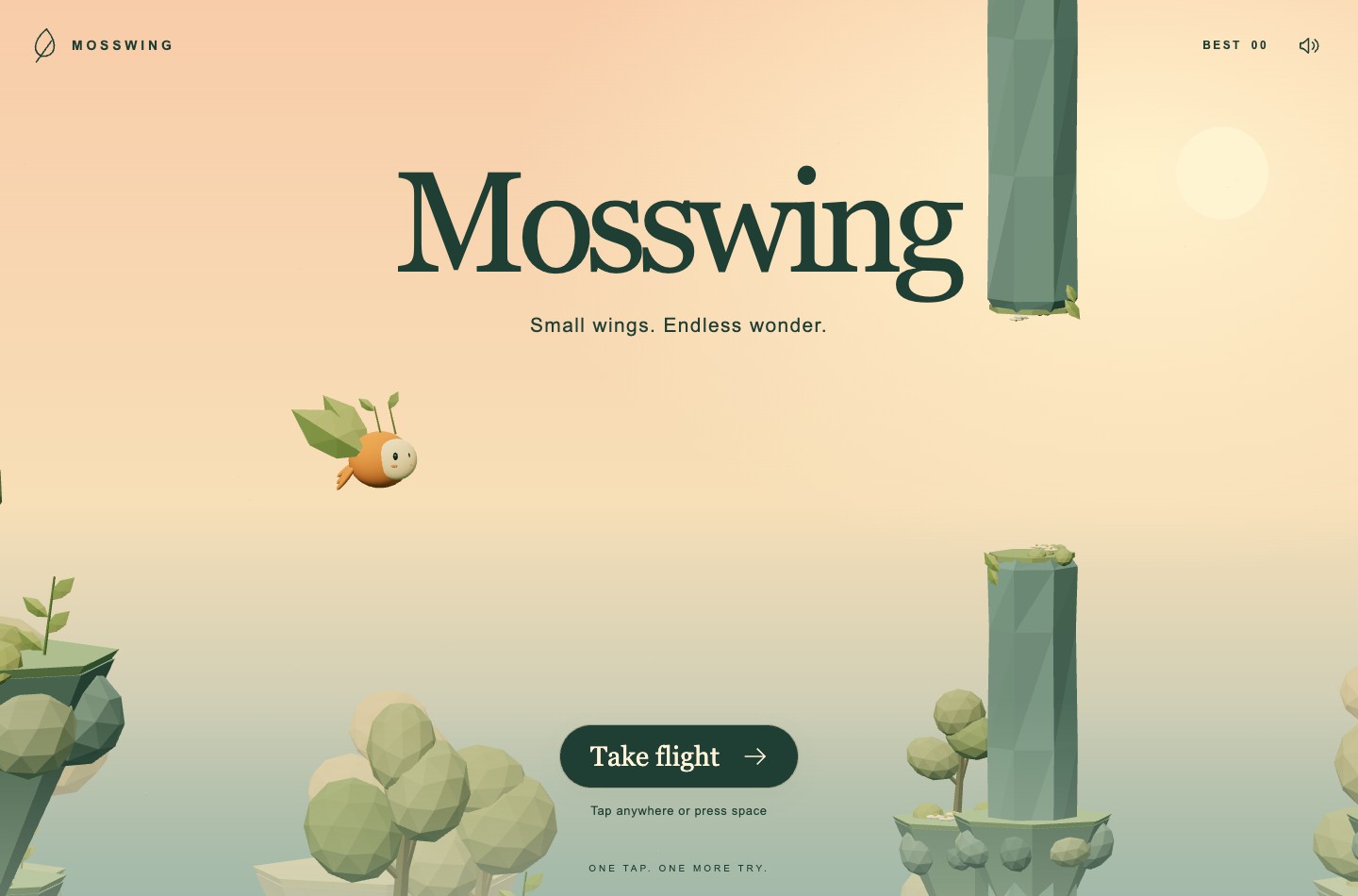
This is the entry to read if you want to reproduce the result rather than admire it. It is two one-shot tests, and it keeps the original prompts and the HTML output so you can fork either.
Mosswing, one file   685 KB · 324 lines · Three.js inlined
Setting              Xhigh
Wall clock           21 minutes
External assets      none
The 685 KB in 324 lines is not a typo — the library is bundled straight into the document, so the lines are enormous.
The first test asked for speed. Translated from the Chinese:
Design, in the shortest possible time, a semi-fluid watermelon game with an entirely new concept (physical properties) — as an HTML game.
The second test removed the time constraint, and the difference in the prompt is the actual lesson. Quoted in full:
Remaster the classic "tap-to-flap" game — the one where you tap to keep a small creature airborne while gliding through an endless series of gaps — as a 3D game playable in a mobile browser. One index.html, opens and plays instantly, no external assets (CDN libraries are allowed; your call).
Keep the core exactly as everyone remembers it: one-tap control, gravity, gaps that scroll toward you, one hit and you’re done, score is gaps passed. Everything else is yours to decide: what the creature is, what the obstacles are, the world, the camera, the feel of the flap, how far to take the visuals. Design an original character and style rather than copying the original’s art. I won’t answer clarifying questions.
I’m judging a complete, elegant, great-feeling piece of work — not a feature list. Small and finished beats big and rough.
Four things in that prompt are doing the work, and none of them are about graphics:
- A hard delivery constraint. One index.html, opens instantly, no external assets. That single sentence removes build tooling, asset pipelines and hosting from the problem.
- A frozen core, an open surface. The mechanics are specified to the letter; the world, creature and camera are explicitly handed over. The model is told where it may not improvise.
- "I won’t answer clarifying questions." One shot means the model must resolve its own ambiguities instead of stalling on them.
- A stated judging criterion. "Small and finished beats big and rough" is a scoping instruction disguised as taste, and it is the opposite of how most people prompt — which is to ask for more features.
4. The Free Game — 24★
Play: vale-dos-vinhedos.lucas579686.chatgpt.site · Source: LucasMarquesShiva/the-free-game · Creator: Lucas Marques
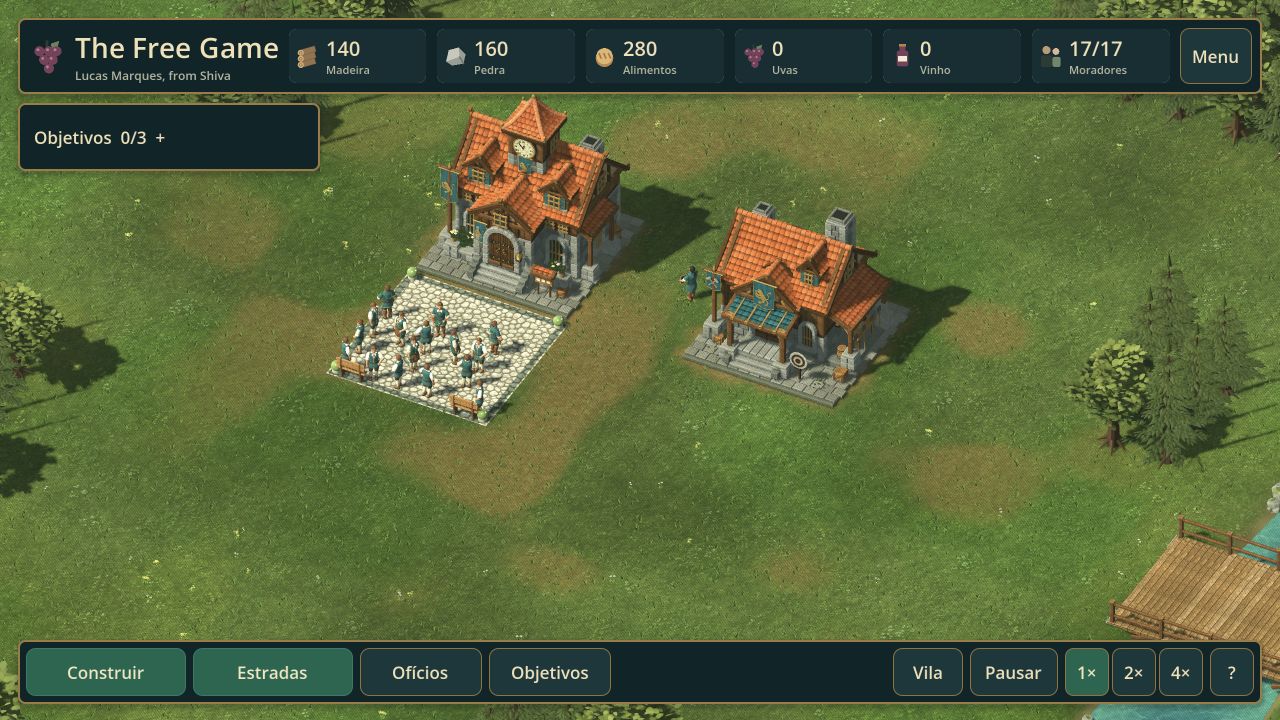
A medieval village builder with roads, workers and production chains, presented as a 3D tabletop settlement. Portuguese-language, marked "versão de testes".
Engine     Godot, exported to the browser (GDScript)
Download   61.8 MB, reported in-page during load
Licence    code MIT · original artwork CC BY 4.0
The outlier of the group: the only one not written in a browser language, the only one shipping a game-engine export, and the largest download by a wide margin. It is also the cleanest on rights — MIT code, CC BY 4.0 artwork, and the creator publicly agreed to being catalogued.
5. BLACKWATER — Silent Harbor — 14★
Play: blackwater-roan.vercel.app · Source: Hiraeth010/blackwater · Creator: hiraeth
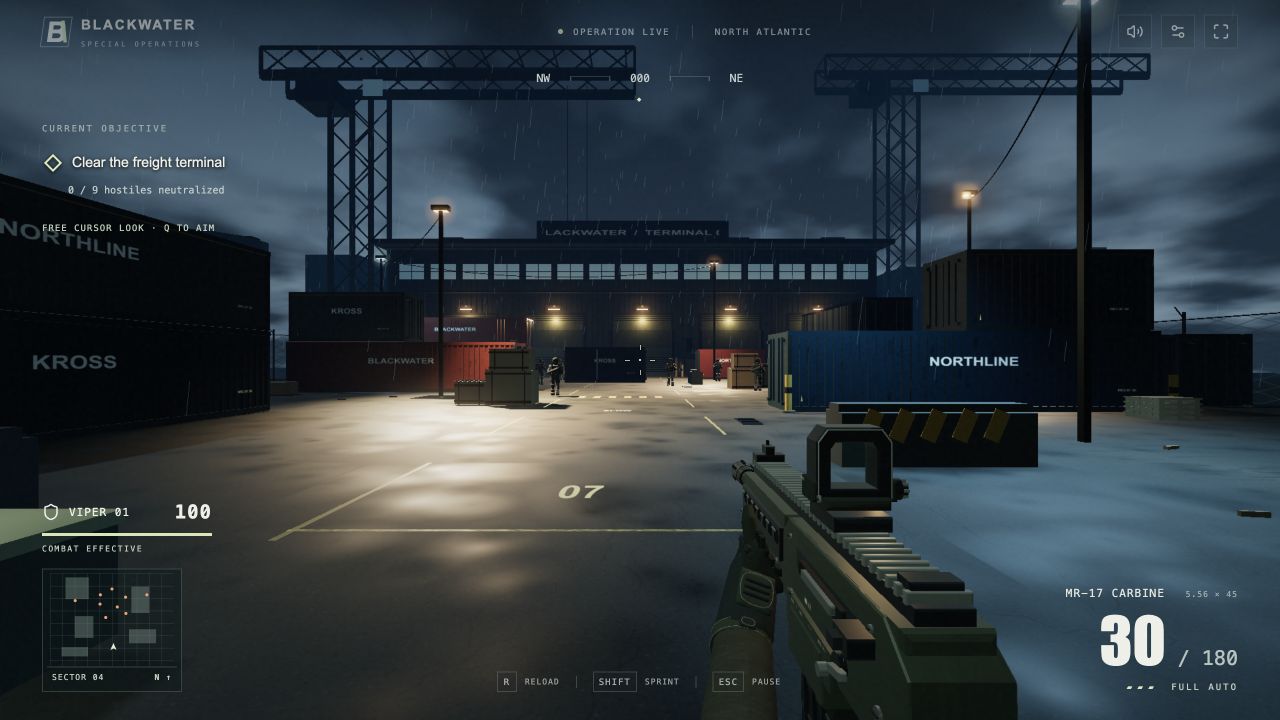
A single-player tactical FPS. Operation 01, a rainy freight terminal in the North Atlantic, complete with coordinates on the briefing screen.
Payload    297 KB — the lightest of the five
Canvases   1
Licence    MIT
How it was built: a one-shot Astra build per the creator, who supplies both source and demo. The useful detail is what came after. The catalogue’s verification note records it precisely:
The current README documents aiming and movement improvements; original one-shot omissions are not presented as current bugs.
In other words: the one-shot produced something playable with aiming and movement that needed fixing afterwards, and the repo is honest about the difference. That is closer to the realistic shape of this workflow than the 45-minute claims circulating on X.
What the five have in common
| Payload | Stack | Prompt published | |
|---|---|---|---|
| Jelly Baby | 24,956 KB | Three.js | no |
| Hit & Run | 864 KB JS + assets | Three.js | no (not an Astra build) |
| Mosswing | 685 KB, one file | Three.js, inlined | yes, in full |
| The Free Game | 61.8 MB | Godot export | no |
| BLACKWATER | 297 KB | browser, TypeScript | no |
A 200-fold spread in payload between the lightest and heaviest, and four of the five are browser-native with no game engine underneath. Three.js is the common substrate, not Unity or Unreal — which is also why these are links you can click rather than builds you have to download.
And the one that published its prompt is the one you can actually learn from. Four of five give you a finished artefact and a claim. One gives you the input, the setting, the elapsed time and the output, and it is the only entry where the result is reproducible in any meaningful sense.
What this ranking is not
- It covers 11 of 97 entries. The other 86 link no repository, so they cannot be ranked this way at all. A game with a million plays and no GitHub page scores zero here.
- Stars are developer interest, not players. They measure who wanted to read or fork the code.
- Model attribution is self-reported. The catalogue says so plainly, and entry number two demonstrates why that disclaimer is not boilerplate.
- Live means it loaded. I opened each game, confirmed it rendered and measured what it pulled. I did not finish any of them.
Screenshots are from the awesome-gpt-6-astra catalogue, whose curated text and artwork are dedicated to the public domain under CC0 1.0. Star, fork and push figures from the GitHub API, 2026-09-15. Payload figures measured in-browser the same day.
← Back to all posts